
If you work with Power Automate and deal with files, you've encountered issues saving them. If you see things like "String/bytes is not convertible to String/binary" or even if you try to open a file in SharePoint, for example, and it doesn't open, you know that something's gone wrong with the process. The issue is that if we're not careful, we'll be saving images, and when we find out that the file is corrupted, it's too late since we may not have the original file anymore.
I see this happening a lot, usually because of incorrect behaviors or simply because we don't understand the differences between the information that we're getting, so today we'll focus on the differences, the actions that use one or the other, and how to convert between them.
Before we start, it's important to mention that, most of the time, you won't need to convert files or do complex tasks. The whole point is for the tools to do the job for you, but it's important for you to know the concepts so that, in case something strange happens, you can quickly understand and debug the problem.
Let's start.
 This is where most of the confusion comes from. Power Automate will show you the base64 representation of the file in the
 Here's the json representation:
 I see a lot of examples online where people tell you that you need to convert the files, but you don't, as you've seen above. Just provide the "ContentBytes", and it will work. Avoid conversions, like
The "Two" Formats
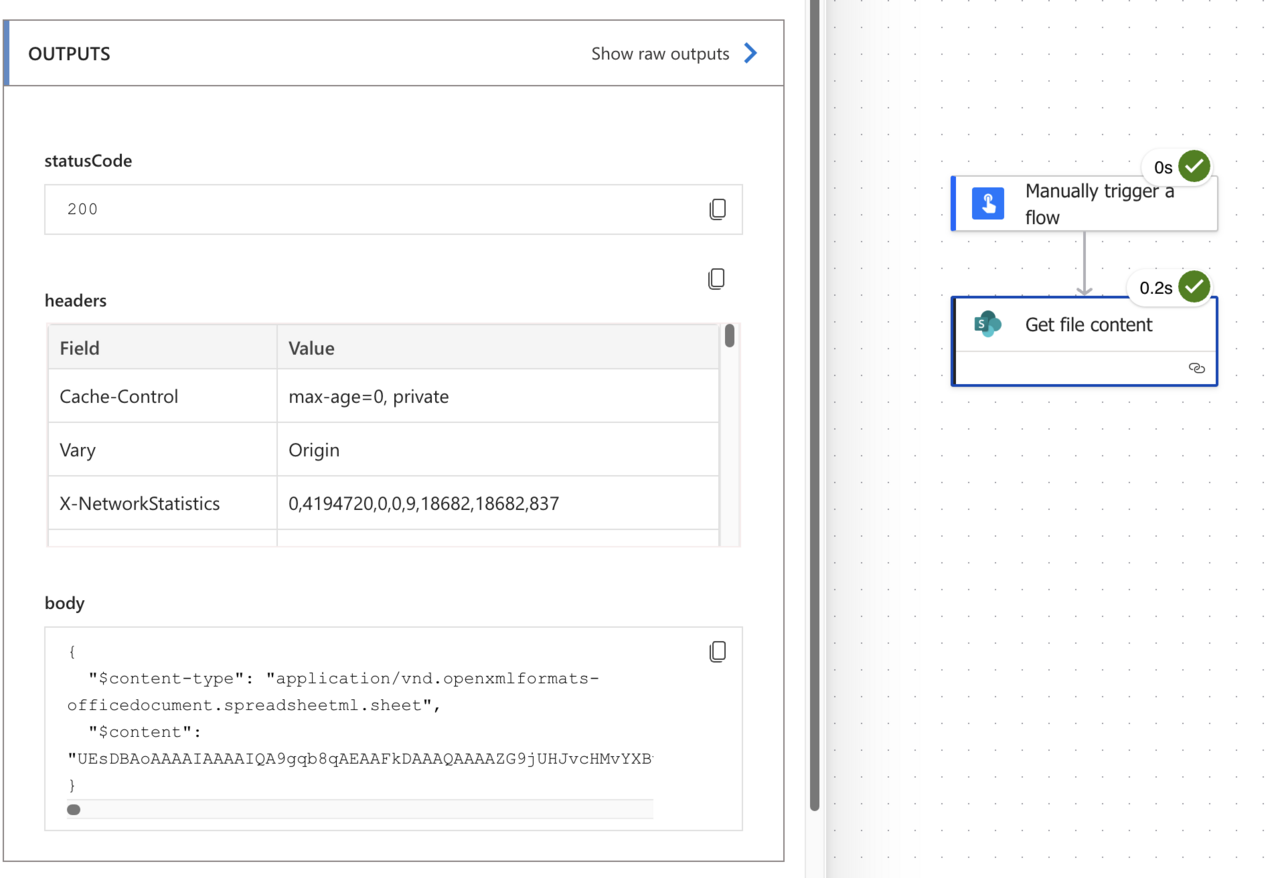
When Power Automate, SharePoint or any other tool handles files internally, it always uses the same format: binary. But when the data is transferred between the tools, the format used is base64, and this is confusing for some people. We don't have 2 formats, but have the same thing (the file), represented in 2 different ways (binary and base64). To better understand, let's look at an example. When you use the SharePoint "Get file content" action, you will get the binary file represented in base64 format. You can identify it in the UI when you see something like this:
This is where most of the confusion comes from. Power Automate will show you the base64 representation of the file in the $content, but you'll know it's a binary file because it contains the $content-type as well, as follows:
{
  "$content-type": "<MIME Type>",
  "$content": "<Base64 String>"
}$content-type tells you what kind of file it is (like "application/pdf" or "image/png") so that the desired tool, like Excel for example, knows what type of file it is opening.
Base64 is a text representation of binary data, in the case above the sequence of letters and numbers, not a different format altogether. It's a different representation of the same thing. The file's contents.
Why is base64 useful?
The question is, why is this useful? Binary format includes a lot of special characters that make things a bit harder to transfer over the wire. It's quite used in communication between systems, where you need to use text formats. Power Automate uses this extensively behind the scenes, like when getting information from SharePoint, for example. If you allow systems to "talk with each other", the communication needs to be done with a set of rules that make problems like quotes, double quotes and more not happen. Base64 clears these errors because it uses a very limited set of characters, making things deterministic when we want to transfer text (even if it contains the file) from one system to another. You'll see external tools that have the "File Contents" field that, commonly, expect this type of data to be provided. The biggest disadvantage of base64 is that they are about 33% larger than the original binary data because of encoding overhead, making the transfer of files a bit more costly in terms of time to send the information. Now that we know what "binary" and "base64", let's take a look at some things that might not make sense.Confusing behaviors
We would expect that all connectors would use the same strategy for transferring files, but it's not the case. Let's take a look at some stranger cases and how to deal with them. I'll add more over time when I find them and if they are useful to you, but if you have one, please let me know, and I'll add it.Outlook Attachments
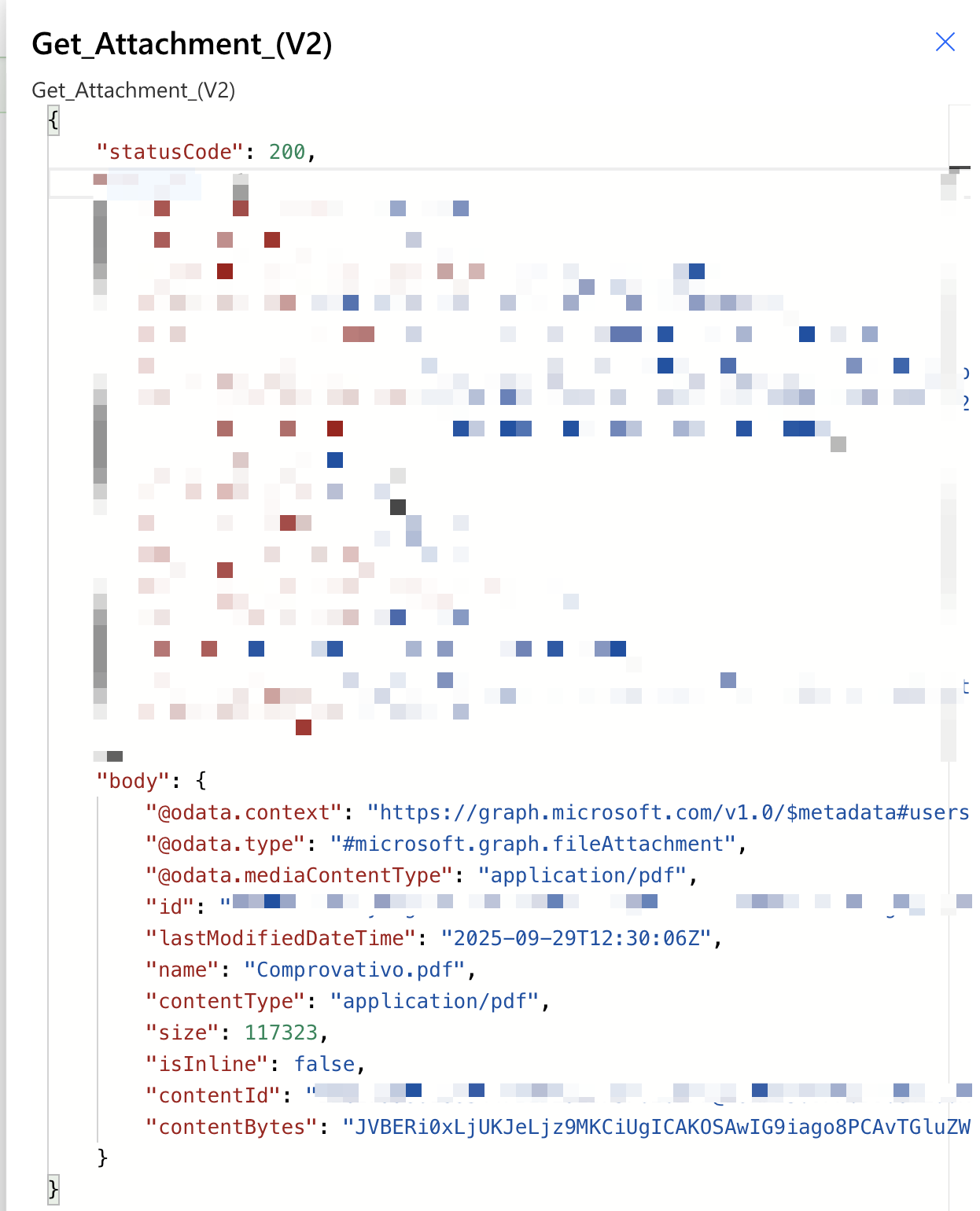
The Office 365 "Get Attachment" action sends the attachment contents but behaves differently. Here's what we get:
Here's the json representation:
{"@odata.context":"https://graph.microsoft.com/v1.0/$metadata#users('9ae6f5e3-ce59-4a00-a92e-924a908342c7')/messages('AA....3D')/attachments/$entity","@odata.type":"#microsoft.graph.fileAttachment","@odata.mediaContentType":"application/pdf","id":"AAMk...=","lastModifiedDateTime":"2025-09-29T12:30:06Z","name":"Comprovativo.pdf","contentType":"application/pdf","size":117323,"isInline":false,"contentId":"B2C...F@EURP250.PROD.OUTLOOK.COM","contentBytes":"JVBERaI...."}- ContentType - the same as our
$content-type - ContentBytes - not the same as our
$content
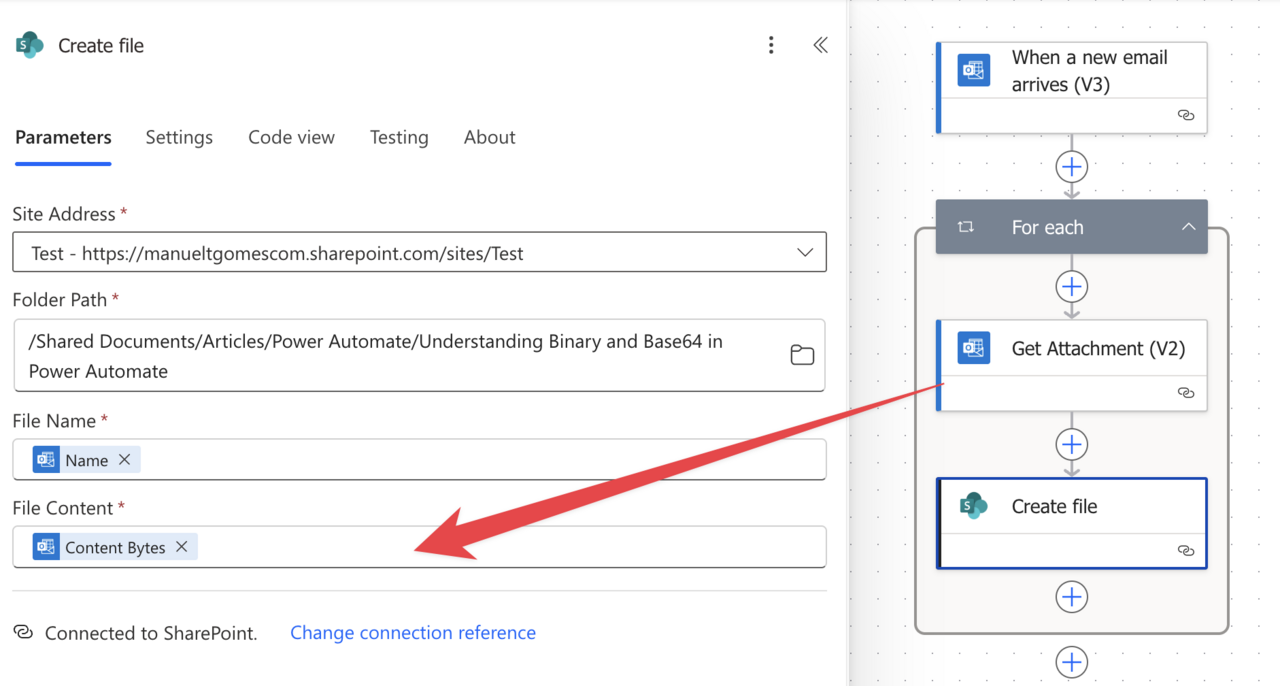
I see a lot of examples online where people tell you that you need to convert the files, but you don't, as you've seen above. Just provide the "ContentBytes", and it will work. Avoid conversions, like base64ToBinary for example, as much as possible if you don't need it.


No comments yet
Be the first to share your thoughts on this article!